Personal injury firms spend significant resources acquiring clients — marketing, referral relationships, intake staff, case evaluation time. But there's a category of client loss that rarely gets tracked or even acknowledged: clients who disengage from their case mid-stream because they couldn't access their medications.
It doesn't look like a referral problem or a retention problem. It looks like a client who stopped calling, stopped treating, stopped responding. And by the time the case falls apart, the connection to a pharmacy rejection three months earlier has been completely lost.
This is a solvable problem. But solving it requires understanding where exactly the breakdown happens and building systems that address it before it affects the case.
How Medication Access Problems Derail Personal Injury Cases
The path from "client can't fill prescription" to "case is compromised" isn't always direct, but it's consistent. It usually unfolds in one of three ways.
The client stops treating
A client who can't afford their pain medication stops taking it. Without adequate pain management, they may reduce or stop physical therapy, skip follow-up appointments, and generally disengage from the treatment plan. From a case documentation standpoint, this creates gaps — periods with no medical visits, no prescription fills, no objective evidence of ongoing injury or impairment. Defense counsel treats those gaps as evidence that the injuries weren't serious or that the plaintiff failed to mitigate damages.
The client finds another attorney
Clients who feel unsupported by their current firm — who couldn't get their prescription card to work and spent three days calling the office with no resolution — sometimes start looking for alternatives. personal injury clients aren't always highly loyal, especially early in a case before significant work has been done. A competitor firm that offers to "take care of everything" can win that client relatively easily if their current firm isn't delivering on the basics.
The client accepts a low settlement
A client who stopped treating due to medication access problems may have an incomplete medical record at the time of settlement. The documented treatment period is shorter than it should be. The prescription history has gaps. The case looks weaker than it actually is — not because the injuries weren't real, but because the evidence of ongoing treatment isn't there. The result is a lower settlement than the client deserved, which also means lower fees for the firm.
The compounding effect: Each of these outcomes is bad on its own. But they also compound — a client who stops treating is also more likely to disengage from the case and more likely to accept a low offer just to be done with it. One unresolved pharmacy problem can trigger all three.
Where Firms Are Losing Ground
Most personal injury firms don't have a deliberate medication access strategy. They handle pharmacy issues reactively — when a client calls with a problem, someone tries to sort it out. This reactive approach has several failure modes:
- Delayed enrollment. The firm doesn't set up pharmacy lien coverage until after a client reports a problem, which means clients who quietly went without medication — rather than calling — were never helped at all.
- No coverage verification at intake. The firm doesn't know which clients have functioning prescription coverage and which don't until a problem surfaces.
- Lien provider friction. The firm is enrolled with a lien provider but the process is slow, phone-dependent, and error-prone — cards take days to activate, rejections require back-and-forth calls to resolve, and case managers spend significant time managing it all.
- Client communication gaps. Clients don't know they have a lien card available, don't know how to use it, or don't know who to call when something goes wrong at the pharmacy counter.
Building a Proactive Medication Access System
The firms that don't lose clients to medication access problems aren't doing anything exotic. They've just built a consistent process that addresses coverage at intake rather than waiting for problems to surface.
Step 1: Assess coverage at intake
Add a coverage assessment to your standard intake checklist. Does the client have active health insurance that covers prescriptions? Is there MedPay or PIP available through an auto policy? Is this a workers' comp case with prescription coverage? The answers to these questions determine what, if anything, you need to set up for this client before they attempt to fill a prescription.
Step 2: Enroll uninsured and underinsured clients immediately
Don't wait until a client calls from a pharmacy with a rejection. For any client who lacks adequate prescription coverage, enroll them with your pharmacy lien provider as part of the intake process — the same day you open the file. With a provider like CreoRx, enrollment takes minutes and the card is active within 30 minutes. There's no reason to let any time pass between opening a file and having coverage in place.
Step 3: Brief the client on how to use their coverage
Clients who don't understand how their lien card works are more likely to encounter problems at the pharmacy and less likely to use the card correctly when they do. A brief one-page explainer — what the card is, where it works, what to do if there's a rejection, who to call at the firm — reduces the volume of pharmacy-related calls to your office and increases the likelihood the client actually fills their prescriptions consistently.
Step 4: Build portal monitoring into your weekly case review
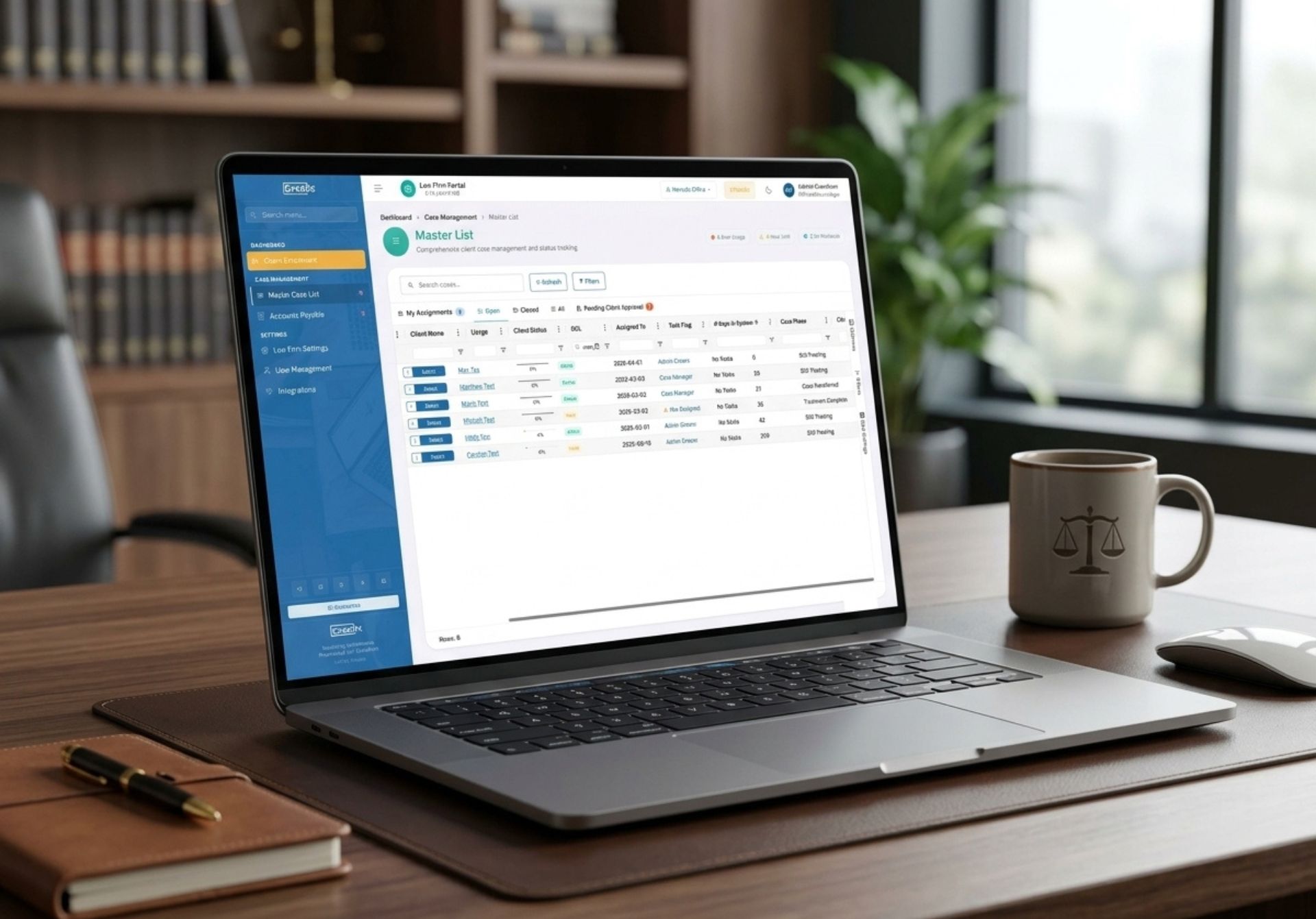
A good pharmacy lien portal gives you real-time visibility into every client's fill history and card status. Make a quick portal scan part of your weekly case review routine — not waiting for problems to come to you, but proactively checking for clients whose spend limit is approaching, whose card may have lapsed, or who haven't had a fill in an unexpectedly long time. That last signal — a long gap in prescription activity — is often the earliest indicator that a client is struggling with access.
"We used to find out a client stopped treating when we pulled the records for settlement. Now we catch it in the portal weeks earlier and can actually do something about it."
The Referral Dimension
There's a side of this problem that doesn't show up in case outcomes but matters enormously for firm growth: referrals.
personal injury clients talk to other people — friends, family members, coworkers who were in accidents. A client who had a smooth experience, who got their medications without hassle, who felt supported by the firm throughout their case, is a meaningful referral source. A client who spent weeks unable to fill their prescriptions while no one at the firm seemed to care is not.
The economics of personal injury practice mean that referral quality compounds over time. Firms that consistently deliver on the basics — including medication access — build referral networks that grow. Firms that don't lose clients quietly, one at a time, in ways that are hard to trace back to root causes.
What to Look for in a Pharmacy Lien Partner
Not all pharmacy lien providers are equally equipped to support a proactive medication access system. The ones that work best for high-volume personal injury firms share a few characteristics:
- Fast enrollment and activation. Same-day activation means no gap between intake and coverage. Anything slower creates a window where clients can encounter pharmacy problems before coverage is in place.
- A real portal with real visibility. Not just a status light, but full fill history, running balances, and spend limit controls — accessible without making a phone call.
- Auto-generated invoices. Settlement prep shouldn't require requesting documentation that should have been generated automatically. Every fill should produce an itemized invoice, available for download immediately.
- Responsive support for actual exceptions. Routine management should happen in the portal. But when something genuinely unusual comes up — a formulary exception, an unusual spend limit request — the provider should be reachable and responsive.
The Business Case in Plain Terms
If your firm handles 100 active personal injury cases and even 10% of uninsured or underinsured clients disengage or settle low due to medication access problems, that's 10 cases per year with compromised outcomes. At average personal injury settlement values, the fee impact of those 10 cases almost certainly dwarfs the cost and effort of running a proper pharmacy lien program.
The math isn't complicated. The harder part is making the connection between a client who stopped calling six months ago and a pharmacy rejection that nobody followed up on. Once you've made that connection a few times, the case for a proactive system becomes obvious.
How CreoRx Supports This
CreoRx was built specifically for personal injury firms that want to run a proactive medication access program rather than a reactive one. Enrollment is a five-minute portal process. Cards activate the same day. The attorney portal provides real-time fill history, spend limit controls, and auto-generated invoices for every transaction. Case managers at firms using CreoRx consistently report that pharmacy-related problems — rejections, gaps in treatment, settlement documentation scrambles — drop dramatically once the system is in place.
If your firm is losing clients or cases to medication access problems you're not fully tracking, it's worth a conversation about what a different approach looks like.
Stop losing cases to pharmacy problems
See how CreoRx helps personal injury firms build a proactive medication access system — from intake to settlement.
Book a Demo →